The Science of Scent: How to Camp Without Attracting Wildlife
A field-tested primer on how bears, rodents and insects find your camp, and the small habits that make you less interesting.
Published
Wildlife interactions in camp range from delightful (a fox trotting through the meadow) to expensive (a bear tearing through a tent) to genuinely dangerous. Almost all of the negative interactions have a common root: scent. Understanding how animals find your camp and what to do about it is one of the higher-value pieces of camping knowledge.
Bears and the two-hundred-yard rule
Black bears and grizzlies have olfactory capabilities that dwarf almost any other terrestrial mammal. A bear can locate a meaningful food source from over a mile away in favorable wind conditions. Once located, the bear will investigate, and the presence or absence of humans is a weaker deterrent than most campers assume.
The classic two-hundred-yard rule — separate your cooking area, food storage area and sleeping area by at least two hundred yards, arranged in a triangle — is not arbitrary. It reflects both the distance at which a determined bear will lose interest and the distance at which food odors dissipate below reliable detection.
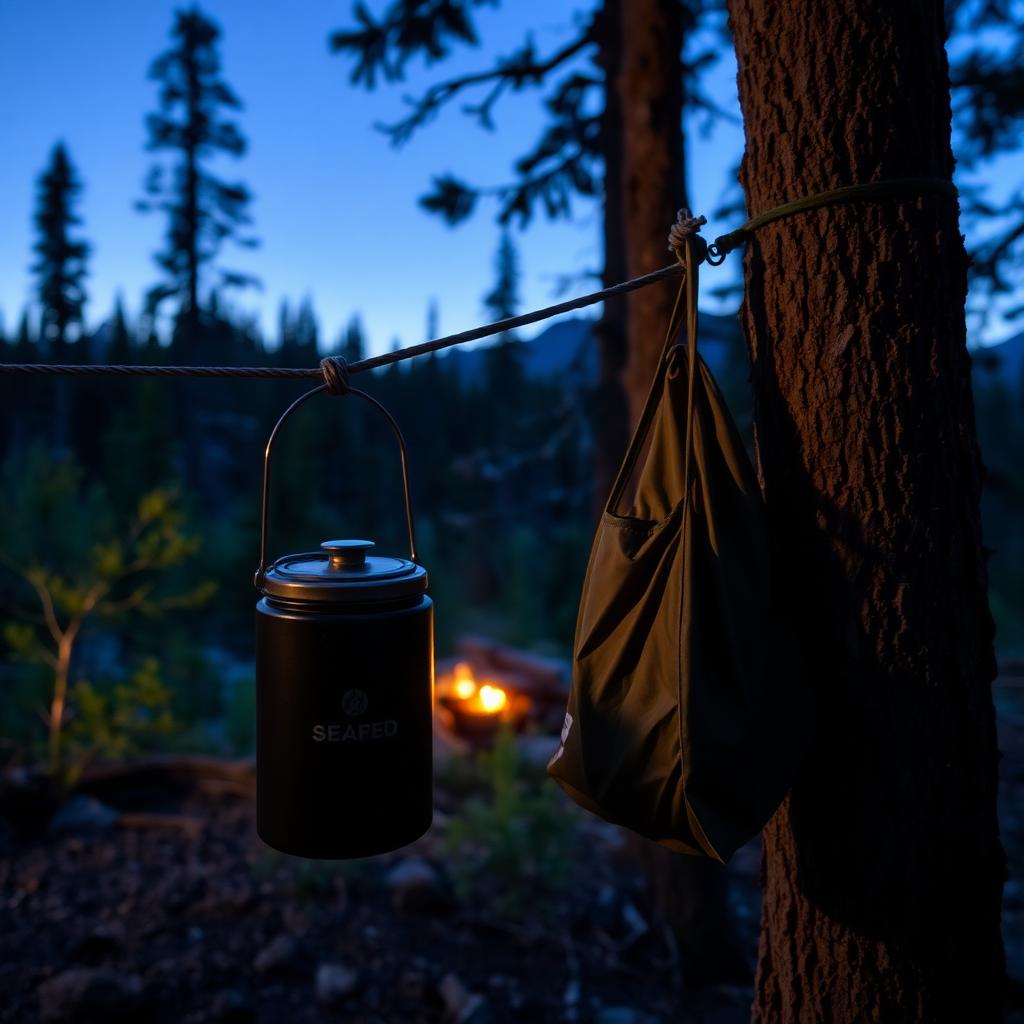
Bear canisters, ursacks and hangs each have appropriate contexts. Canisters are required in many areas and are the most reliable general-purpose solution. Ursacks are lighter but require correct tying to be effective. Hangs done well are still valid where trees are appropriate, but hangs done poorly are worse than storing food on the ground.
Rodents and the food bag underestimate
Small rodents cause more damage to camping gear over a year than bears cause to all campers combined. Mice chew through tent walls, backpacks and food bags with startling efficiency, and they are attracted to nearly any residual food smell, including trash you thought was sealed.
The practical implications are to store all food and trash in rodent-proof containers even on nights when bears are not a concern, and to be scrupulous about crumbs. A gorp bag that spilled once has left a scent trail that will attract rodents for weeks.
Insects and the humidity trap
Mosquitoes and biting flies are attracted primarily by carbon dioxide, warmth and moisture. Camping in humid low spots, near still water or in windless meadows dramatically increases exposure. Camping on a breezy rise, even one only slightly higher than the surrounding terrain, dramatically decreases it.
Repellents matter, but campsite selection matters more. If a campsite has an insect problem at three in the afternoon, it will have a much worse insect problem at dusk.
Skin and clothing
Your body is itself a scent source. Sweaty clothing, unwashed skin and food residue on hands all contribute to the odor picture your camp presents to wildlife. Washing hands after cooking, changing into dedicated sleep clothes and storing any food-contaminated clothing with the food are all high-value habits.
Perfumes, deodorants, sunscreens and toothpastes are all significant scent sources. Store them with food. Do not sleep with them in the tent, and do not brush your teeth near the tent.
Waste
Human waste and food waste both attract wildlife. Bury human waste six to eight inches deep in mineral soil at least two hundred feet from water. Pack out toilet paper. Do not use catholes as trash pits.
Grease is one of the strongest attractants in camp. Pour cooking water through a strainer and pack out the solids, or dilute heavily and disperse well away from camp on durable ground. Never dump greasy water in a fire pit, where it becomes a slow-release attractant for the next several campers.
None of this eliminates wildlife encounters, and it should not. Encounters are one of the great joys of camping. The goal is to keep them safe, brief and to the wildlife's benefit as well as yours.