Field Test: Four Three-Season Solo Tents Compared Over 20 Nights
Twenty nights across five states and every weather condition an early summer could produce. What actually held up.
Published
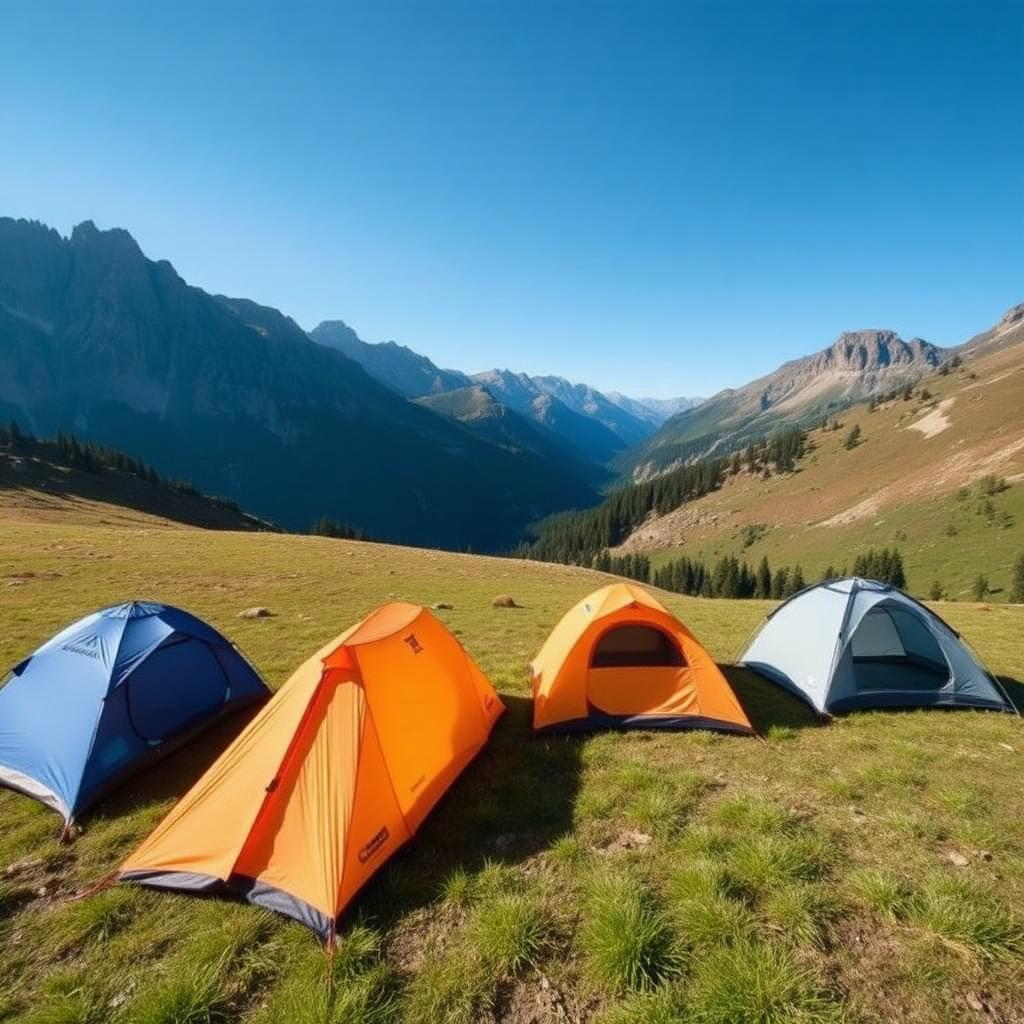
We spent twenty nights this spring living out of four three-season solo tents in the two-pound weight class. Trips ranged from warm desert nights in southern Utah to a snow squall in the Wind River Range and a coastal storm on the Olympic Peninsula. The goal was not a spec-sheet comparison but a plain report on how each tent behaved in the field.
Tent A: single-wall trekking-pole shelter
The lightest tent in the group at twenty-two ounces packed, this single-wall trekking-pole shelter pitches quickly once you have muscle memory for the geometry. In the desert it was superb — well ventilated, easy to set on packed sand with a couple of rocks, and pleasant to sit up in during afternoon storms.
In the Wind Rivers it struggled. A wet snow accumulated on the low pitch angle, requiring us to get out twice in the night to knock it off. Condensation on the inner wall was significant on humid mornings, and the small footprint meant wet gear had to stay in the vestibule or in a stuff sack under our knees. A skilled user in dry conditions will love it. A less experienced user in wet snow may not.
Tent B: freestanding two-pole double-wall
The heaviest of the group at thirty-six ounces, and the one that most reviewers would call the safest all-arounder. Full mesh inner and full-coverage fly separated the humid air from the sleeping area, and condensation never once dripped on us. Pitches on any surface, including a granite slab where we had to weight the corners with rocks.
The trade-off is real weight and a real price. It also packs larger than the others. But for a beginner who wants to camp confidently in a wide range of conditions without becoming an expert in pitching geometry, this is the tent we would recommend without qualification.
Tent C: semi-freestanding hybrid
A compromise between the other two, this hybrid uses two poles at the head and a trekking pole at the foot. It splits the difference on weight (twenty-eight ounces) and on livability. Head room is generous, foot room tapers sharply, and taller campers will find their bag pressing against the wall.
The hybrid architecture handled the Olympic Peninsula storm well. Wind noise was moderate rather than alarming, and the fly held its shape through a night of steady rain. Setup on rocky ground was harder than we hoped; the two head poles wanted a flatter platform than we usually had.
Tent D: ultralight dome
A twenty-four-ounce full-mesh dome with a separate fly and two short poles crossed at the top. In warm conditions with the fly off, this was the most enjoyable tent in the group — a stargazing shelter with just enough bug protection. In cold conditions with the fly on, condensation was manageable but not as controlled as the double-wall.
The dome's weakness is wind. In sustained winds above about twenty-five miles per hour, the low profile helps but the flexible poles allow more deformation than the semi-freestanding hybrid. We would not choose this tent for a trip where afternoon storms in exposed terrain are expected.
What we would buy
For most readers most of the time, the freestanding double-wall is the right answer despite the weight penalty. For a confident user in mostly dry conditions, the single-wall trekking-pole shelter is a joy. The hybrid and the dome are excellent tools for the specific niches they serve, but neither is quite as forgiving as the double-wall.
None of the four failed in a meaningful way over twenty nights, which is itself worth noting. Modern three-season tents in the two-pound class are genuinely reliable products in a way that they were not a decade ago.