Cold-Weather Canister Stove Shootout: Six Models in the Freezer
We tested six canister stoves in a controlled cold chamber down to minus ten Fahrenheit. The results were not what marketing brochures suggested.
Published
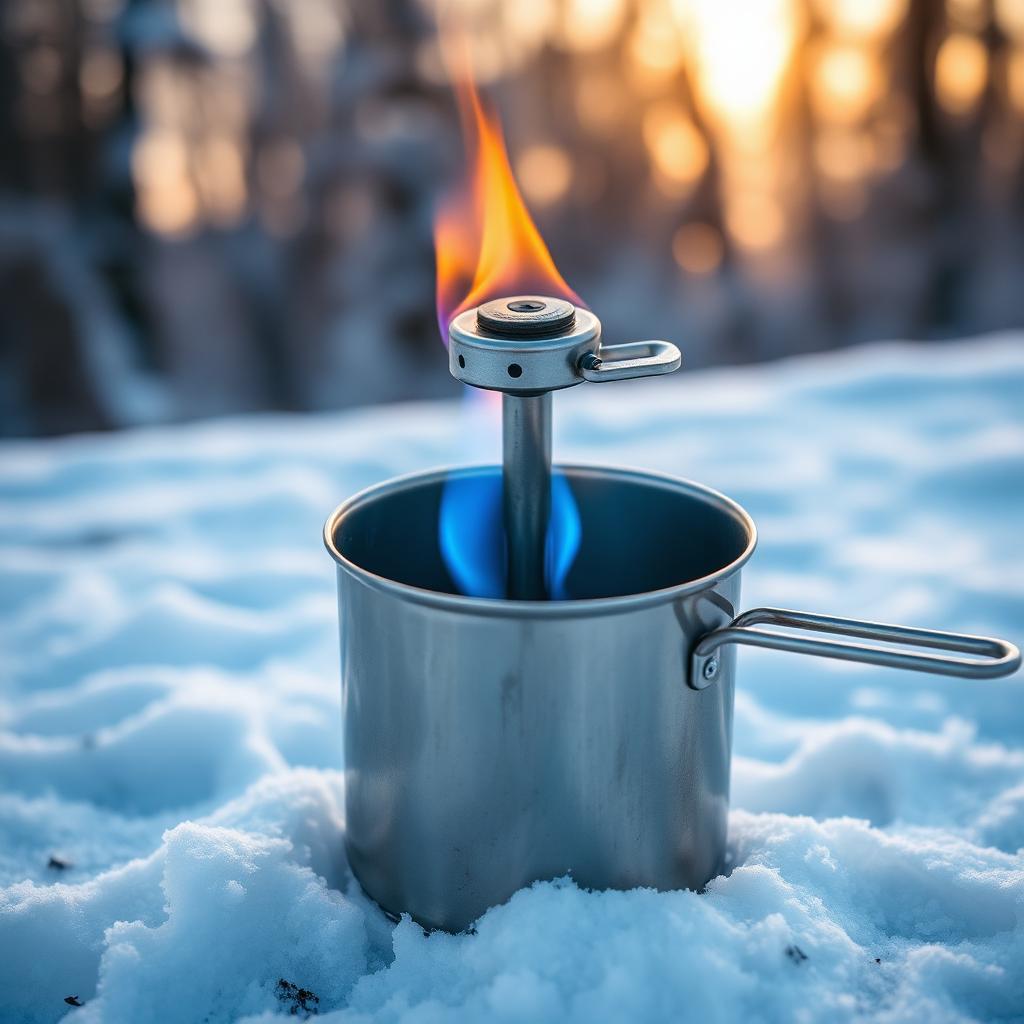
Canister stove performance degrades in cold weather in ways that are easy to overlook until a trip goes badly. To sort out what actually works when temperatures drop, we tested six popular stoves in a controlled cold chamber at five temperatures from freezing down to minus ten Fahrenheit, then confirmed the results with a weekend of real-world use at 9,000 feet in early spring.
Methodology
Each stove boiled a liter of thirty-three-degree water at each test temperature, using a fresh canister of the same fuel blend and an identical pot. We measured time to boil and remaining fuel weight. In the real-world confirmation, we let each stove operate in ambient temperatures without inverting canisters or warming them by hand, to represent the behavior most users will actually observe.
Upright canister stoves
The three upright stoves in the test performed similarly at freezing but diverged sharply below zero. All three saw boil times roughly double from freezing to zero Fahrenheit; two of the three failed to reach a rolling boil at minus ten in twenty minutes, at which point we ended the test.
The best of the upright stoves was the one with the largest burner head and best flame spreader, which retained useful output the longest. But even this stove was not the tool we would want for consistent sub-zero use.
Remote canister stoves with preheat tubes
The two remote-canister stoves with preheat tubes were transformative. Once running, both maintained near-normal boil times all the way to minus ten Fahrenheit. Startup at very cold temperatures still required patience — several minutes of warming the tube on low output before opening the valve fully — but the eventual performance was excellent.
For any trip where reliable stove performance below zero matters, a remote canister stove with a preheat tube is the right tool, full stop. The weight penalty over an upright stove is roughly three ounces, which we consider a reasonable cost for the reliability gain.
Liquid-fuel stove for reference
We included a single white-gas liquid-fuel stove as a reference point. Unsurprisingly, it outperformed every canister stove at every temperature, with almost no degradation from freezing to minus ten. For extreme cold and for extended expeditions where fuel availability is uncertain, liquid fuel remains the gold standard.
The trade-offs are noise, complexity, and the ongoing chore of pumping and priming. For weekend trips even in genuine winter conditions, most users will be happier with a remote canister stove.
What we recommend
For summer and shoulder-season use, any modern upright canister stove will serve well. For consistent use below freezing, and certainly for anything below zero, choose a remote canister stove with a preheat tube. For extreme cold, expedition trips or reliable performance regardless of altitude and fuel source, carry a liquid-fuel stove and accept the operational complexity.
The temptation to buy one stove that does everything is real, and stove manufacturers are happy to sell it. In practice, most active campers benefit from owning two stoves and matching the tool to the trip.