Photo Essay: Autumn Forests, Small Camps
Six days walking a color-season loop in the Appalachians, camping small, and photographing what a forest actually looks like when you slow down.
Published
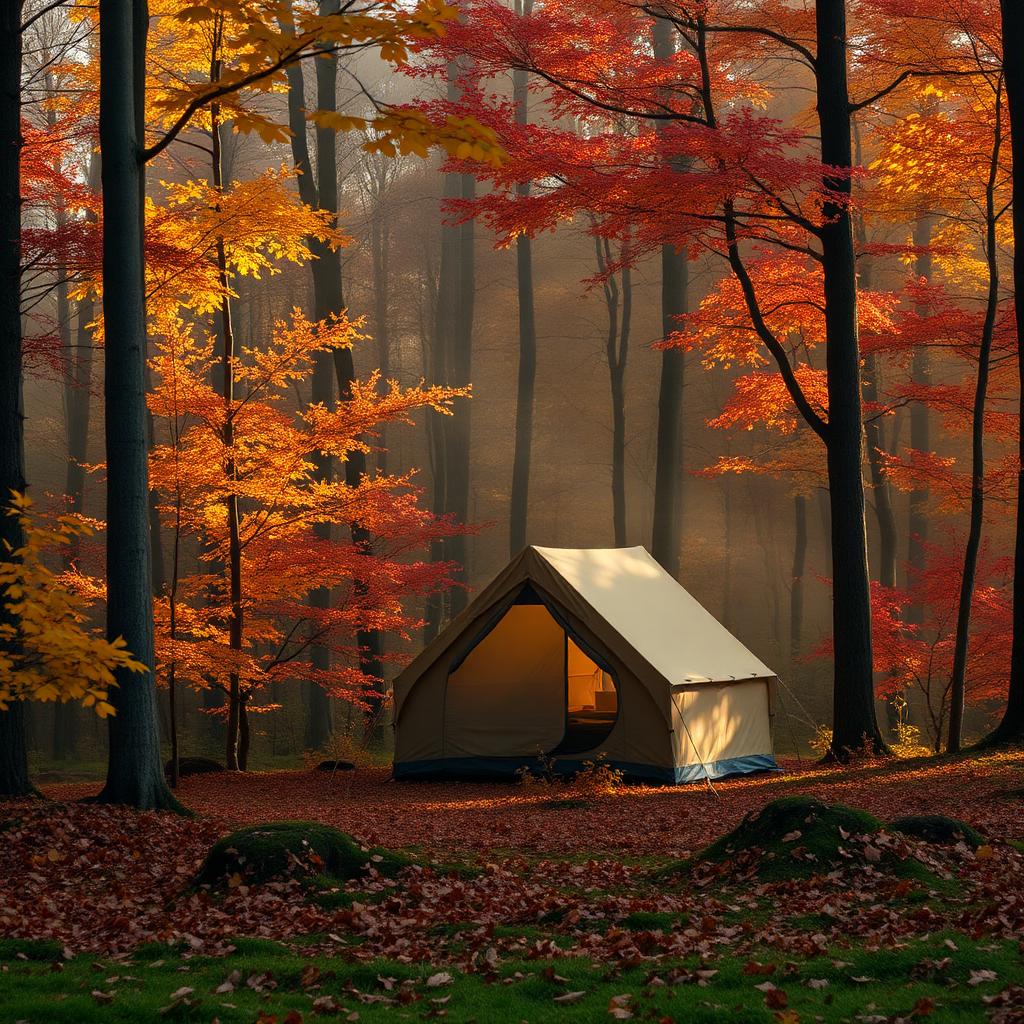
A six-day loop in the southern Appalachians during the third week of October, with a small tent, a modest camera and no fixed itinerary. The trip's goal was not to reach anywhere in particular but to slow down enough to see what the forest was doing.
Day one: hillside camp under yellow birch
The first camp was set at four in the afternoon on a bench beneath a stand of yellow birch. The trees had already dropped a thick layer of leaves; the ground was more yellow than the sky. An image from inside the tent looking out through the door caught the color as a curtain around a small human shelter.
Day two: creek at first light
A camp beside a small creek, chosen the previous evening for its acoustic properties as much as its visuals. First light through the canopy struck the water at a low angle and produced flashes of gold. The best image was made while sitting on the sleeping bag inside the tent, holding the camera through the open door.
Day three: rain, and a shelter
An unforeseen day of steady rain forced a stop at a trail shelter. The photographic day was almost entirely lost, but a series of images made from inside the shelter — wet gear hanging, a small stove burning, another hiker cooking — captured what a rain day actually looks like in the backcountry. Not glamorous, but real.
Day four: high ridge in color
A long day along a high ridge with color at every switchback. The best image was made near a rock outcrop where a lone maple had turned scarlet against a background of yellow oak. The composition took several attempts; the camera setting was straightforward, but the framing needed to include a hint of the ridge's fall-away for context.
Day five: mist in the hollow
A morning of mist filling the hollow below camp. The camp itself was above the mist, which turned an otherwise ordinary view into an island in a sea of pale gold. The window of good light was maybe fifteen minutes, and the camera happened to be set up on the tripod because I had planned to shoot the trees near camp. Luck, but the kind that rewards routine.
Day six: the last light on the shelter
The final camp was another trail shelter, and the final image was made at the edge of legal light. Two hikers were cooking dinner outside the shelter with headlamps on, and the last blue in the western sky framed them beautifully. The exposure was a straightforward long handheld shot, made possible by the stability of leaning against a tree.
What the trip taught
The strongest images of the trip were not the most dramatic scenes. They were the small compositions that included the camp itself: the tent, the shelter, the stove, the hiker. Landscape photography is often taught as the pursuit of grand views without human presence. In camping photography, a small human element is often what makes the image legible.
The other lesson was to keep the camera accessible. Every image on this trip was made either from inside the tent, from a rock within twenty feet of camp, or in the natural rhythm of hiking with the camera on a chest strap. Nothing was made by climbing a peak specifically for a shot.
Camp small, walk slowly, and the forest will show you more than you expected.