Photo Essay: Desert Camping After Dark
Eight desert nights across the American Southwest, framed by the strange geometry of Milky Way, canyon and campfire.
Published
Desert camping produces some of the most dramatic photography opportunities in the outdoor world. The sky is dark, the ground is graphic, and the human presence of a lit tent or a small fire reads with unusual clarity. This essay is a series of notes from eight nights across the Southwest.
Night one: Milky Way over sandstone
A first camp near Bears Ears, arriving in the last hour of daylight to find a broad slab of sandstone with a clear southern horizon. The Milky Way rose behind the slab around midnight. Preparation the previous evening — knowing where the core would rise, and having the camera pre-configured — meant the actual shooting took ten minutes and left plenty of time for sleep.
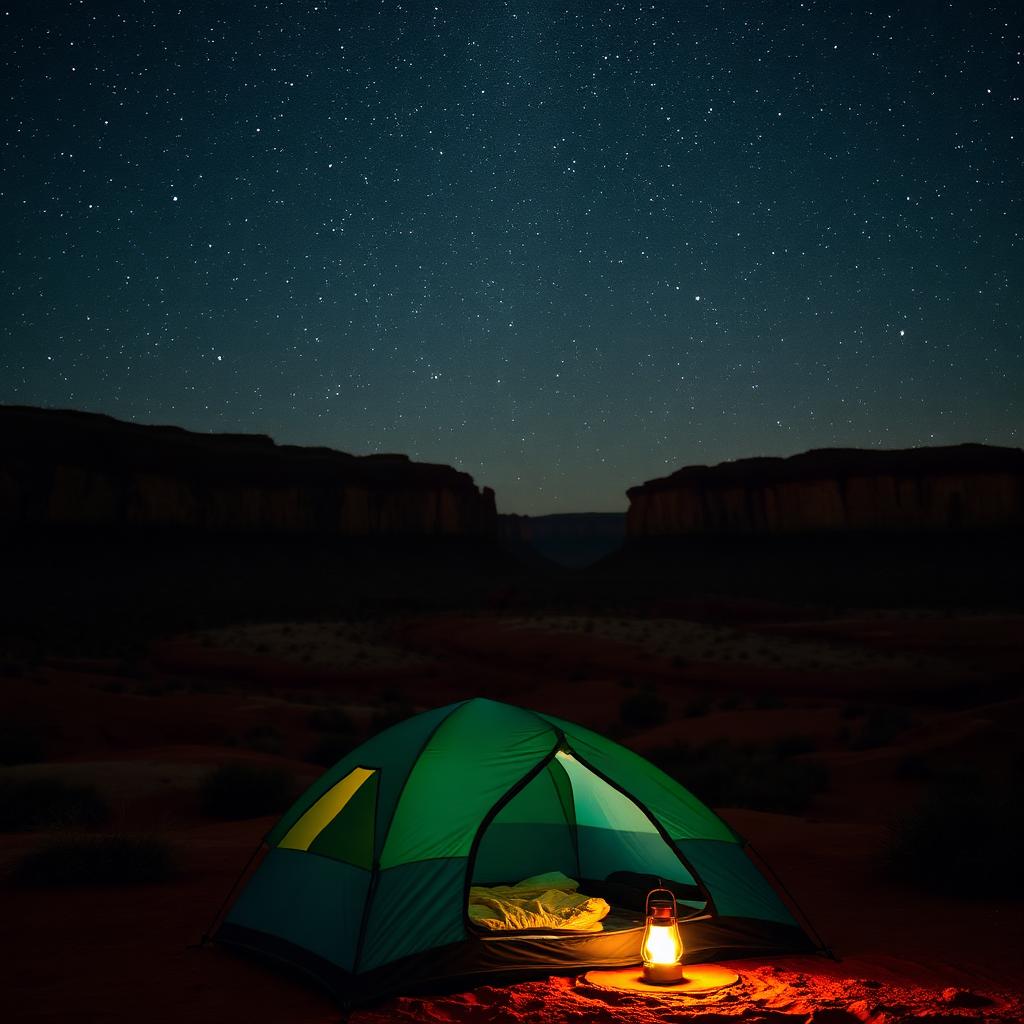
Night two: a lit tent in a canyon
A canyon camp in the Escalante where the walls rose sharply on both sides. A tent with a warm lantern inside became the focal point of a long-exposure image that used a headlamp as the only foreground light. The trick was to move the headlamp slowly during the exposure to paint the canyon walls without any single hot spot.
Night three: moon setting over dunes
A camp near a small dune field in southern Utah, with a first-quarter moon setting behind the dunes. The moonlight raked across the ripples at a low angle and produced texture that a fully dark scene would not have shown. The lesson: not every good night photograph requires a new moon.
Night four: fire and stars
A small legal campfire in a designated ring, framed against a rising Sagittarius. Getting the exposure right was a challenge; the fire wanted to blow out at the exposure needed for the sky. The solution was two exposures — a short one for the fire, a long one for the sky — blended in post-processing.
Night five: a wind night, no images
A camp in Arches National Park during a night of sustained thirty-mile-per-hour winds. The tent held, sleep did not, and the camera stayed in the pack. Some nights are for weathering rather than shooting, and that is fine.
Night six: perseids
A perseid meteor shower night in the Grand Staircase-Escalante, with hourly rates well above average. A tripod-mounted camera set to a five-second interval captured over three hundred meteors across the night. The one image that made it into the final portfolio was actually a stack of the twelve best individual meteors overlaid on a single sky.
Night seven: a distant thunderstorm
A dry lightning storm forty miles to the west, seen from a camp on a rim above the San Rafael Swell. The distance made the lightning safe to photograph and the sound arrived long after each flash. The image caught a single strike arcing across the desert floor with the Milky Way still visible above.
Night eight: the last morning
A pre-dawn photograph of camp with the first blush of orange in the eastern sky. The tent was already partly packed, the stove was on, coffee was brewing. The image is not dramatic, but it is the one I look at most often. It is what desert camping actually feels like.
Desert photography rewards preparation and repetition. Nights that produce nothing are common. Nights that produce a single image worth keeping happen often enough to justify the alarm at three a.m.